
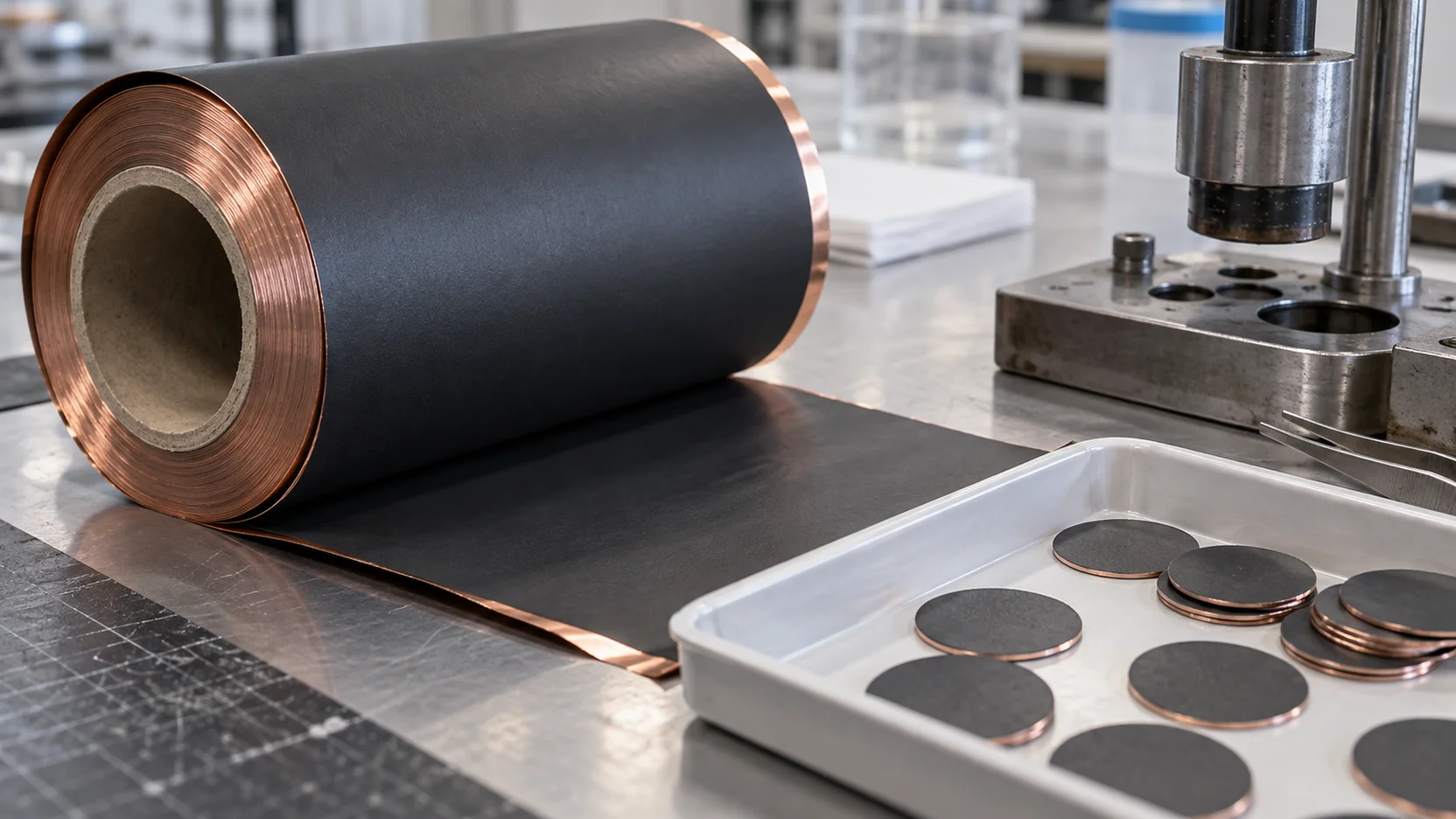
Propylene carbonate (PC) can be used in graphite systems under specific formulation and electrode conditions. Conventional PC-based electrolytes, however, carry risks of solvent co-intercalation, continuing decomposition and damage to the graphite structure. Compatibility needs to be assessed in relation to salt identity, concentration, additives and electrode surface conditions. Studies have improved outcomes by changing salt concentration or interfacial conditions.
What happens between graphite layers?
Graphite has a layered structure. During lithium-ion battery charging, lithium enters the spaces between layers for storage and leaves during discharge. This reversible entry and exit is called intercalation and deintercalation. Normal lithium storage requires the graphite structure to remain functional.
Propylene carbonate (PC) can form solvation structures with lithium ions. Under unfavorable conditions, solvent molecules enter the layers together with lithium ions: co-intercalation. Subsequent reductive decomposition, gas evolution and interlayer structural changes can cause graphite exfoliation. The problem is more complex than simply a large molecular size.
Why a protective interphase matters
The solid electrolyte interphase (SEI) is a thin layer formed by reactions of electrolyte components at the electrode surface. A suitable SEI allows lithium ions to pass while reducing continued electron-driven electrolyte decomposition. Inadequate protection permits side reactions to keep consuming electrolyte and available lithium.
Ethylene carbonate (EC) favors this protection in many conventional graphite systems, while PC behaves differently in conventional systems. Their shared cyclic-carbonate structure and high dielectric constants do not establish identical interfacial reactions. The presence of EC alone also cannot guarantee stability of the complete formulation.
Approaches that may improve compatibility
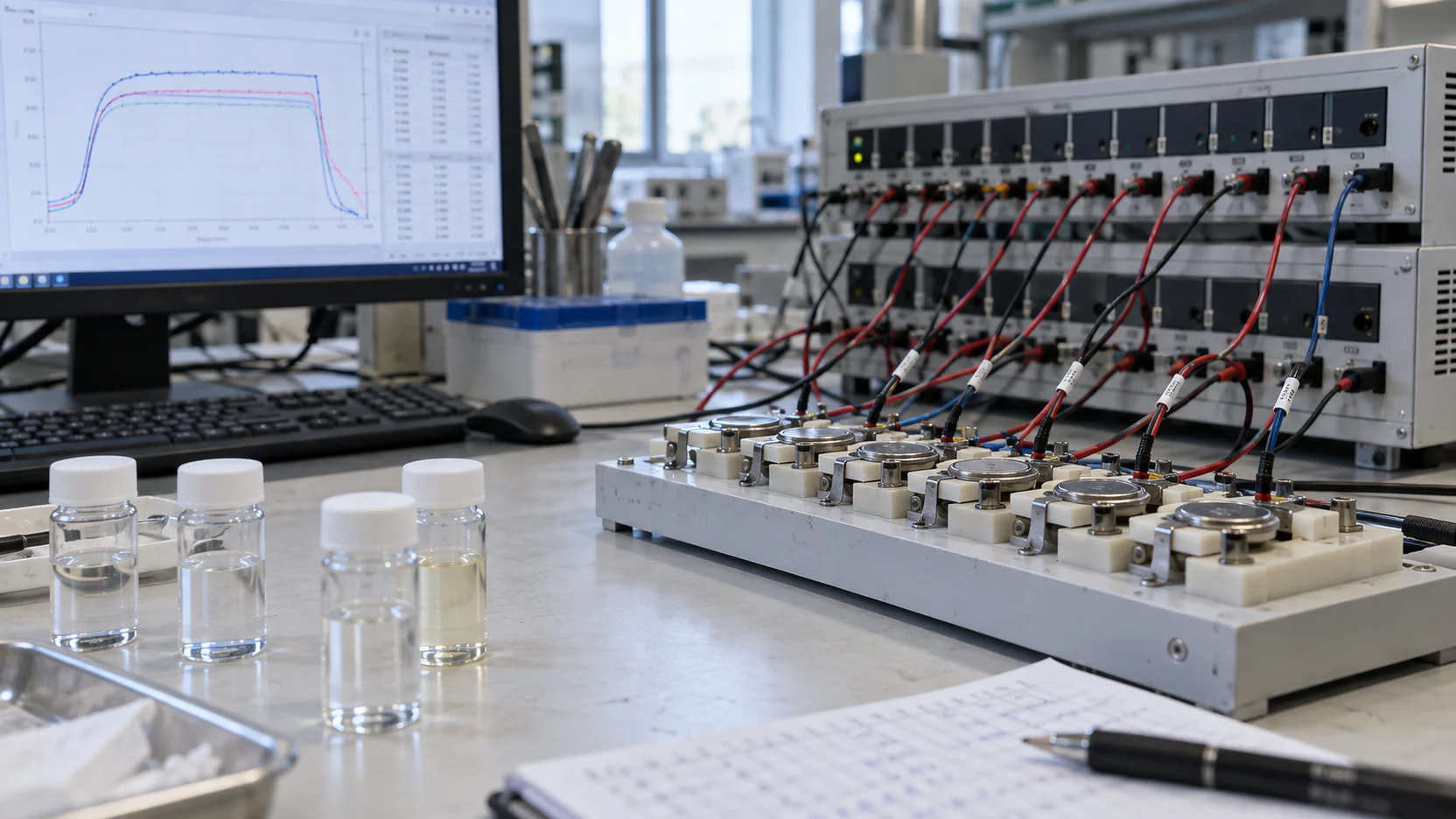
Film-forming additives seek to change the sequence of interfacial reactions: protective reactions occur first, reducing opportunities for continuing PC decomposition or co-intercalation. Electrode surface treatments instead modify the surface PC encounters, for example by using a protective layer to prevent direct contact. That layer must still allow lithium ions through; incomplete coverage or excessive resistance may limit its effectiveness. These approaches act on the liquid components and electrode surface respectively and are not simply interchangeable.
Salt-concentration and solvation approaches act on the coordination environment in the liquid, changing how solvents, lithium ions and anions participate in interfacial reactions. High concentrations may form a different interphase composition but may also increase viscosity or alter transport. This addresses the reaction environment; it does not guarantee the same protection on every electrode surface.
Why can changing salt concentration improve compatibility?
In 2016, Pan and colleagues studied lithium bis(trifluoromethanesulfonyl)imide (LiTFSI)/PC electrolytes with binder-free graphite electrodes. Continuous reduction was observed at low salt concentrations, while reversible lithium intercalation and deintercalation occurred at higher concentrations. Improved performance was associated with increased lithium fluoride content in the interphase.
Spectroscopic analysis of electrode surfaces after cycling linked charge–discharge behavior to interphase composition. This shows that changing salt concentration can change interfacial reactions and protection. These results apply to the experimental conditions of LiTFSI/PC and binder-free graphite; they are not guarantees for other lithium salts, commercial full-cell lifetimes or the performance of a particular PC grade.
Understanding PC’s advantages and limitations
PC’s high dielectric constant and broad liquid-temperature range make it a candidate solvent for some electrochemical systems. For graphite applications, raw material purity, water content and interfacial compatibility need to be considered together. Purity control cannot replace interface design.
To establish whether PC suits a target system, assess the combination of salt identity, concentration, film-forming additives and electrode surface, then confirm transport and cycling behavior. Other electrodes and industrial uses involve different conditions and should be evaluated for their respective applications.
References
Pan et al.: LiTFSI/PC on binder-free graphite electrodes (2016)
Electrochemical study of carbon-coated graphite in PC-based electrolytes