
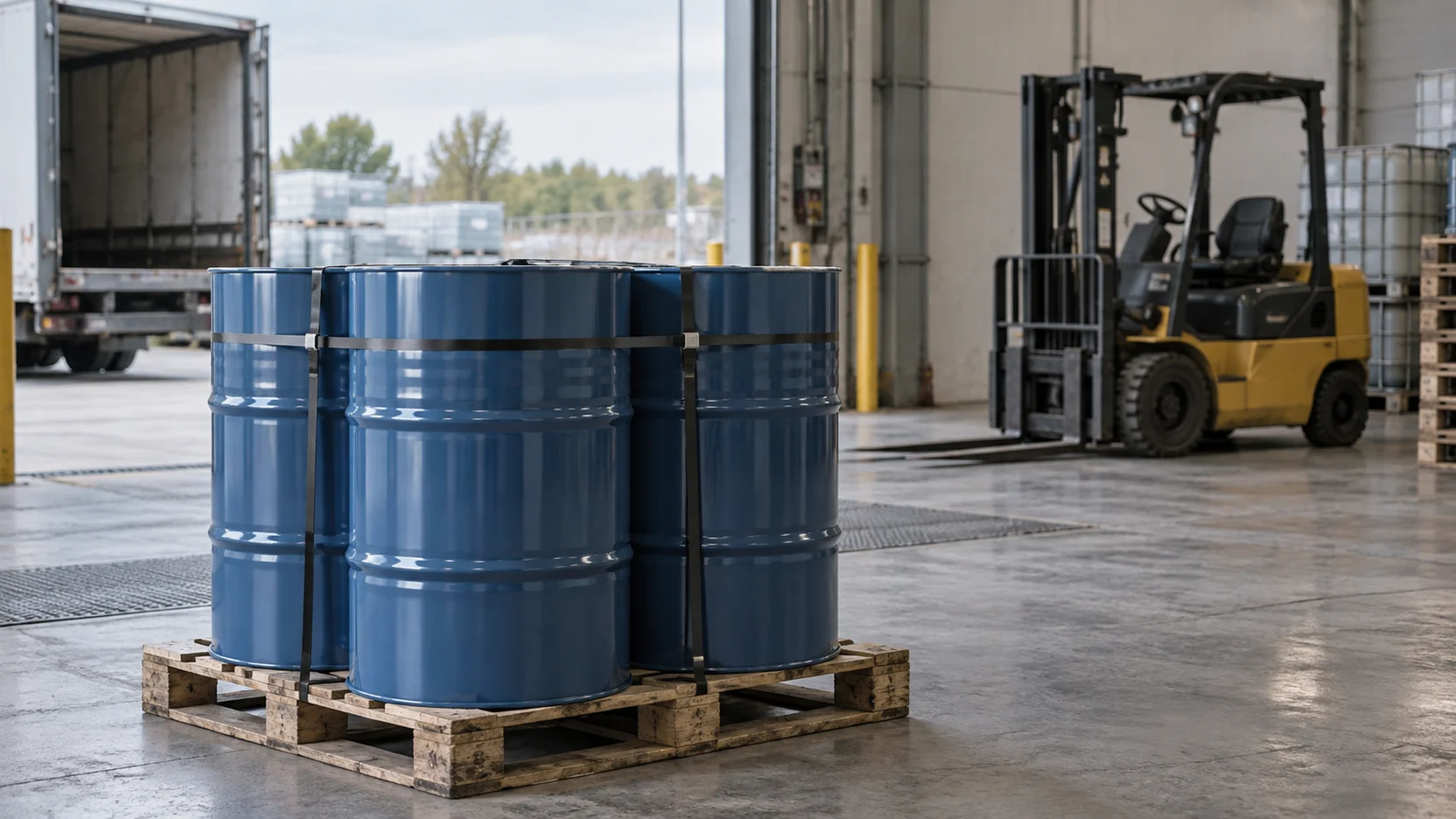
UN numbers identify goods for transport. Dangerous goods classification describes the principal transport hazard, and packing groups, where applicable, indicate degrees of danger. HS codes classify goods for customs. These identifiers answer different questions, are not interchangeable and cannot individually establish every transport and import requirement.
What the different names and numbers tell you
| Information field | Main question answered | What it cannot replace |
|---|---|---|
| UN number and proper shipping name | How transport rules identify the substance or goods category | Full product composition and all handling requirements |
| Hazard class | The principal type of transport hazard | All health and environmental hazards |
| Packing group, where applicable | The degree-of-danger grouping under the rules | Specific packing instructions and container suitability |
| HS code | The customs category of the commodity | Dangerous goods classification and transport approval |
A UN number consists of UN followed by digits and identifies a substance or goods category under transport rules. It does not necessarily correspond one-to-one with a single pure chemical. Used together, the proper shipping name and number identify the transport subject more accurately than a commercial abbreviation.
The hazard class identifies the principal hazard type: Class 3, for example, denotes flammable liquids. Where applicable, packing groups I, II and III distinguish degrees of danger. A packing group is not a package size and cannot alone determine which container may be used.
Reading a transport entry using DMC and DEC
In the US 49 CFR hazardous materials table, for example, dimethyl carbonate (DMC) is listed as UN 1161, Class 3, packing group II; diethyl carbonate (DEC) is listed as UN 2366, Class 3, packing group III. Both are listed as flammable liquids. Their packing groups differ, and each remains subject to its respective transport requirements.
Example scope: these entries come from US eCFR 49 CFR 172.101. The original verification date was September 23, 2026, when the page showed the regulatory compilation as updated through September 21, 2026. Packaging, air transport and vessel stowage fields list separate requirements within this US system. They cannot directly replace Chinese shipment requirements, the international maritime IMDG Code or other jurisdictions’ rules. This article does not use these examples to determine shipment requirements for a specific batch.
Reading transport information for EMC, EC and PC
Transport information for ethyl methyl carbonate (EMC) must be read alongside its flammability, flash point and actual product composition. DMC or DEC numbers and packing groups cannot simply be copied. Similar names do not establish a shared classification.
For ethylene carbonate (EC) and propylene carbonate (PC), consult section 14 of the relevant product safety data sheet (SDS), noting the region, transport mode, physical form and temperature. EC in particular may be shipped as a solid or a heated liquid; the documented state must match the actual goods.
A statement that a product is not regulated as dangerous goods under a particular transport mode does not mean an absence of health, exposure or handling hazards. SDS hazard, storage and protective-measure sections still serve their respective purposes.
First match the product identity in SDS section 1 to the composition in section 3, then confirm whether section 14 covers the intended land, sea or air transport mode. If the relevant information is missing, obtain this product’s classification, physical form and transport conditions for the intended mode.
Why sea, air and land requirements differ
Transport mode affects packaging, quantities, marks and loading requirements. A UN number is not a transport permit for every route. Packaging suitable for one mode does not automatically meet another mode’s requirements.
A product SDS provides important information, but actual transport also depends on current rules and the condition of the goods. Packaging must both meet transport requirements and be compatible with the material. Where low-water control is needed, cleanliness, dryness and sealing are also part of product protection.
Why HS codes cannot be converted from UN numbers
HS stands for the Harmonized Commodity Description and Coding System, used to classify goods in international trade. The World Customs Organization maintains internationally harmonized six-digit codes, which local tariff schedules may subdivide further. HS concerns commodity identity and classification rules, not transport hazard classes.
Pure substances, formulated mixtures and different commercial forms may require different classification decisions. The actual code also depends on the importing jurisdiction and current tariff schedule. A fixed, globally universal set of tariff codes should therefore not be imposed on all five carbonates. Dangerous goods numbers, HS codes and origin cannot be inferred from one another.
What else needs checking for an actual shipment?
When arranging transport, check the product name, composition, physical form and temperature. Confirm the SDS’s applicable jurisdiction and transport mode, then use current rules to establish classification, packaging, quantity, marking and loading requirements. Customs classification is handled separately according to commodity identity and the destination’s current tariff schedule.
Transport documents should match the actual goods and route. For low-water products, receiving and transfer arrangements also need to address container compatibility, cleanliness, dryness and sealing.
References
US example fields: column 8 of the 49 CFR 172.101 table gives packaging provisions, column 9 air-transport quantity limits, and column 10 vessel stowage information. Consult the relevant fields and rules when using the table; the UN number is only part of the required information.
US eCFR: 49 CFR 172.101 hazardous materials table and field explanations