
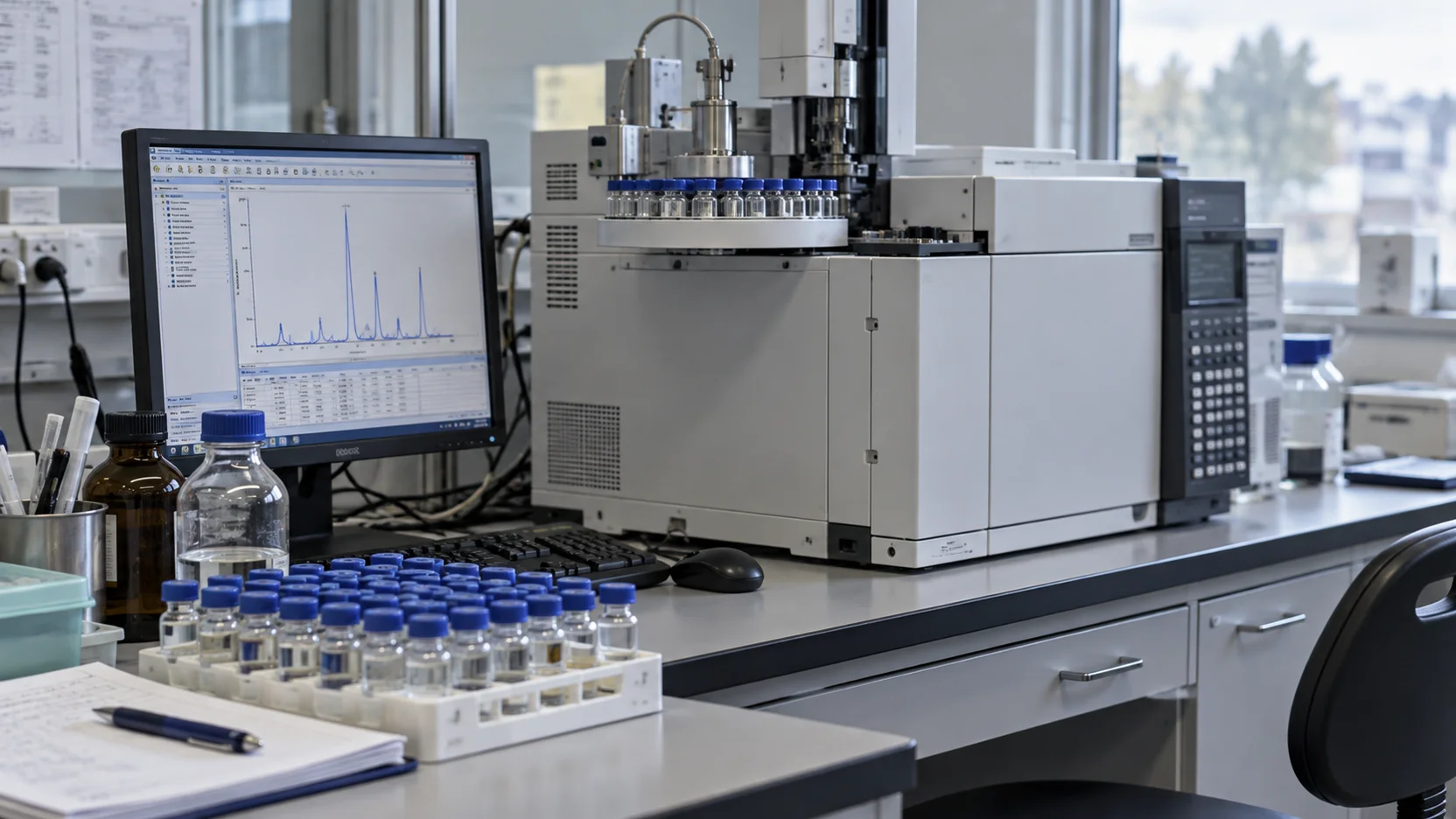
Impurities commonly considered in electrolyte solvents include water, organic impurities, acidic components, inorganic impurities, particles and nonvolatile matter. They may enter with production feedstocks or originate from packaging, equipment or use. Whether a component is an impurity depends first on whether it is in a single-solvent product or a final electrolyte: another component requiring control in a raw material may also be an intentionally added cosolvent in a formulation.
Water can enter again after production
Water may arrive with raw materials or come from air, undried containers or lines. It can dissolve in the solvent without forming visible droplets. In electrolytes containing water-sensitive components such as lithium hexafluorophosphate (LiPF6), trace water may participate in decomposition and formation of acidic byproducts.
Water is therefore usually measured separately. A transparent appearance and high main-component purity do not establish that water content meets the application’s requirements.
Organic impurities relate to manufacturing routes and material contact
Organic impurity types relate to the manufacturing route. Transesterification systems involving alcohols may leave unreacted alcohols, related carbonates and diols; cyclic-carbonate purification may also involve diol control. The table lists impurities that may be relevant to different processes. Specific parameters and concentrations need assessment against product specifications and test results. It does not describe Lixing’s actual production routes or list substances detected in its batches.
| Solvent product | Potential components of concern | Potential source | Effect or analytical consideration |
|---|---|---|---|
| Dimethyl carbonate (DMC) | Methanol, ethylene glycol or propylene glycol | Residual feedstock and coproducts from transesterification of cyclic carbonates with methanol | Quantify alcohols and diols separately; main-peak area is not a substitute |
| Diethyl carbonate (DEC) | Ethanol, residual cyclic carbonate and diols | Transesterification using ethanol and subsequent separation | Distinguish residual reactants from DEC and check method resolution |
| Ethyl methyl carbonate (EMC) | Methanol, ethanol, DMC or DEC | Equilibrium reactions involving methanol/ethanol and carbonates, and separation | Assess alcohol residues separately from composition shifts caused by related carbonates |
| Ethylene carbonate (EC) | Ethylene glycol, diethylene glycol | Diol residues from cyclic-carbonate preparation and purification | Consider analytical coverage of diols and their residual levels |
| Propylene carbonate (PC) | Propylene glycol | Diol residues from cyclic-carbonate preparation and purification | Identify and quantify propylene glycol separately from the main PC component |
For example, DMC may be intentionally added as a cosolvent in a final electrolyte while being a related component controlled separately in an EMC raw material. Charging an EMC material while ignoring its DMC content makes the actual ratio differ from the calculated one. This is a composition shift. Whether water, alcohols or other substances trigger unwanted reactions is a separate chemical effect; the two must not be conflated.
Acidity is not the content of one particular acid
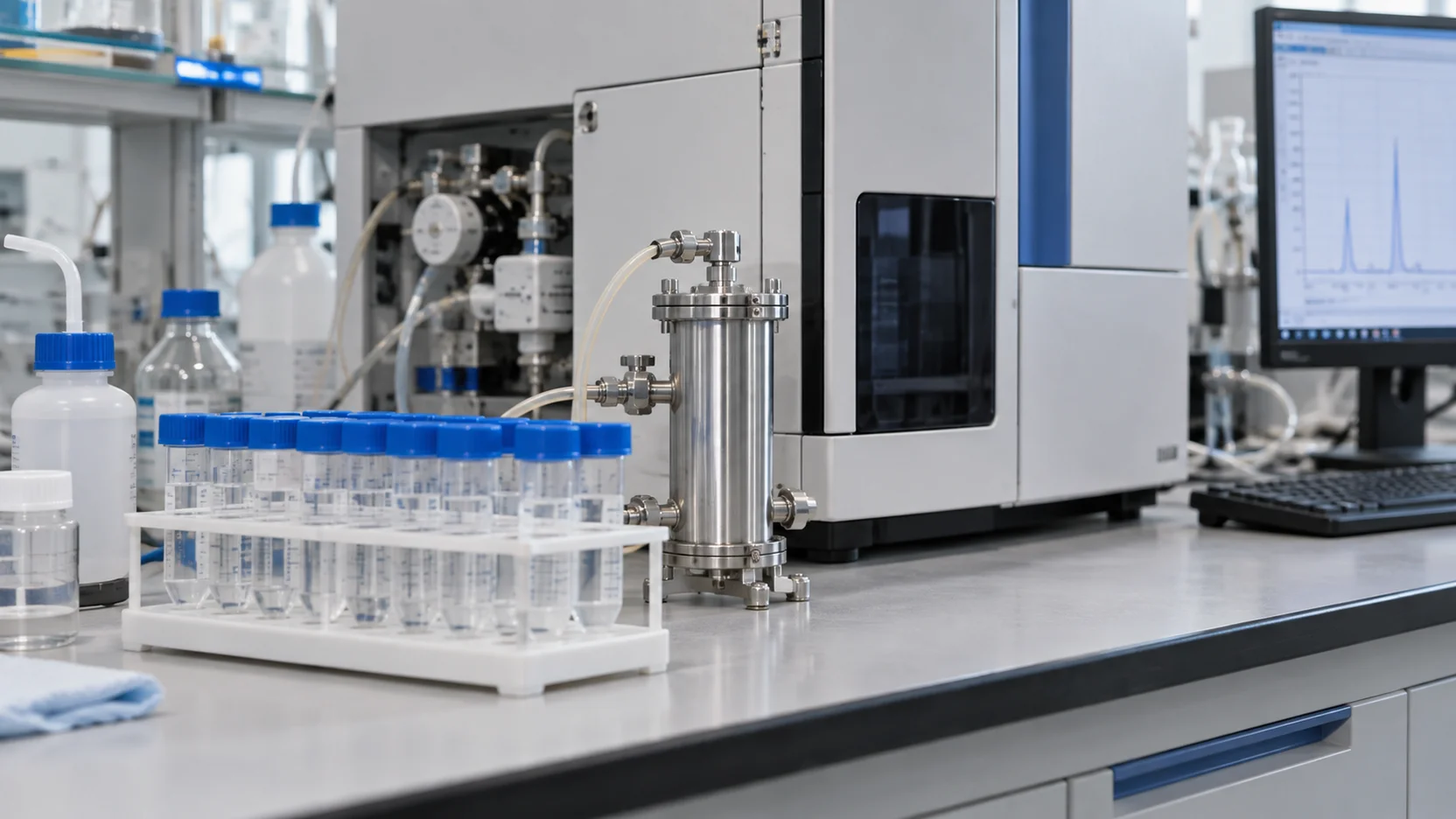
Acidic substances may arise from feedstock residues, degradation or hydrolysis and may affect corrosion, interfaces and storage stability. An acidity test reflects acidic components under a specified method. An acidity value cannot unconditionally be interpreted as the content of a particular acid.
In particular, distinguish a salt-free solvent from a formulated electrolyte. Hydrogen fluoride risks in LiPF6-containing systems cannot be used to assert that every pure carbonate raw material contains hydrogen fluoride.
Inorganic impurities, particles and nonvolatile matter
Metal elements and ionic residues may originate from raw materials, processing substances or equipment contact. Their effects depend on identity, content and chemical form. Measuring total elemental content does not establish which compound contains that element.
Particles may come from the environment, containers or equipment wear. Nonvolatile matter is the residue left under specified test conditions. These are different: dissolved residues invisible to the eye may also remain after solvent evaporation. They may affect surface cleanliness, filtration and subsequent use.
Why several analytical methods are needed
Gas chromatography (GC) separates and measures many organic components. Karl Fischer analysis is commonly used for water, while elements, ions and particles require corresponding analyses. Combining these results provides information about different impurity classes.
Read test results alongside sample information and the method’s scope. Not detected generally means below the method’s detection capability. Whether a detected component affects use also depends on its concentration and the sensitivity of the target system.
For example, a GC method can quantify methanol once separation from neighboring peaks and calibration have been established. Unknown peaks need further identification, and gas chromatography–mass spectrometry (GC/MS) can provide structural clues. For diols, metals and other parameters, the scope of the relevant method still needs confirmation. Detecting DMC and EMC alone does not establish coverage of all impurities.
References
Table sources: potential components in DMC, DEC and EMC refer to the alcohol–carbonate reaction and separation systems described in patent US20110313185A1. EC and PC refer to the diol-impurity discussion in patent US5922888A, including ethylene glycol and diethylene glycol for EC.
Agilent: GC/MSD analysis of carbonate solvents and additives in battery electrolyte (5991-9356EN)
Metrohm: water determination and analytical methods for battery materials
Public patent US5922888A: diol impurities and purification research for EC and PC