
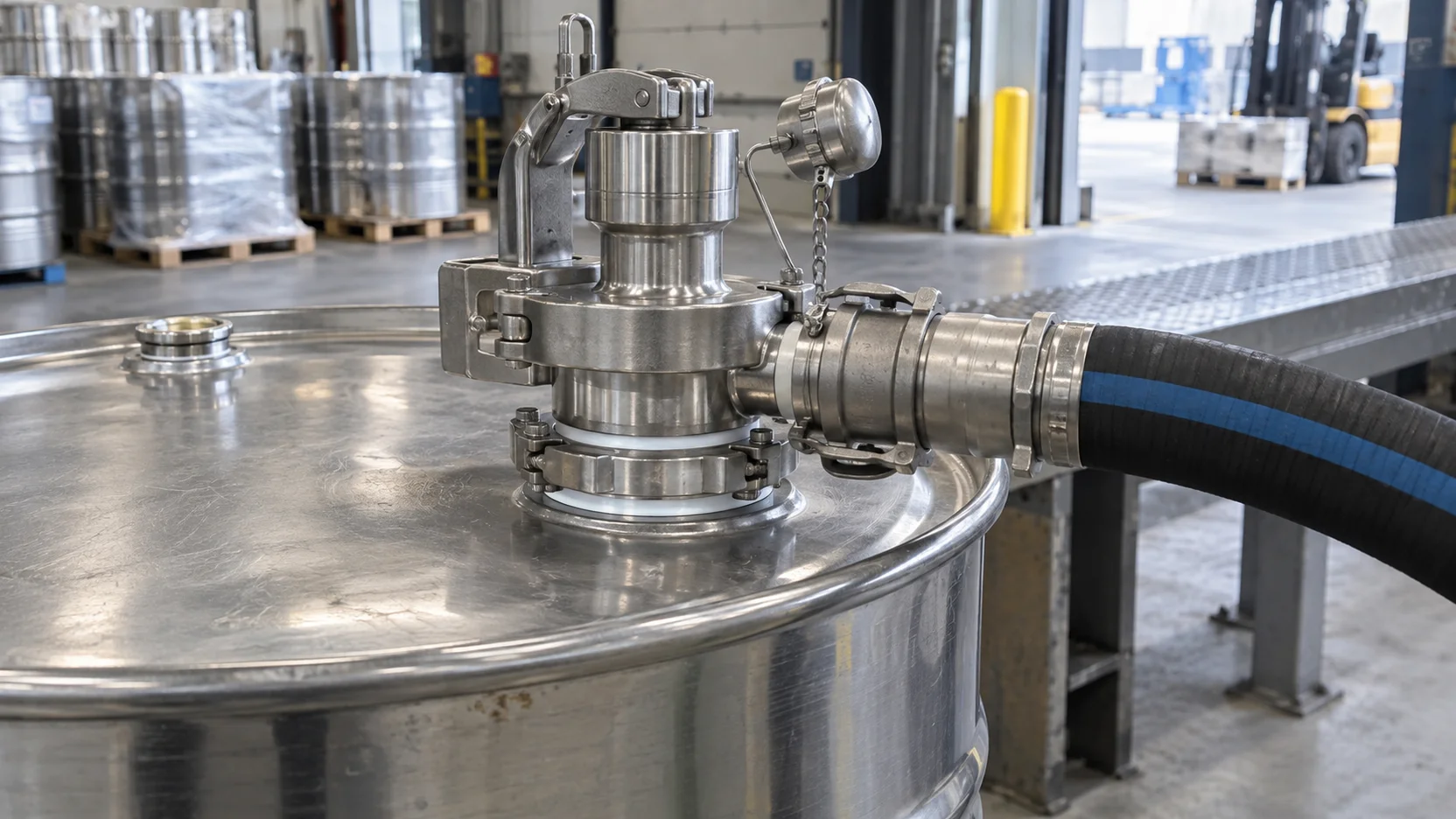
When carbonate solvents contact humid air, water vapor can enter and dissolve in the liquid, causing an initially low-water material to take up moisture. Containers, gases and lines may also introduce water. Moisture control needs to reduce these contacts and residues throughout storage, sampling and transfer.
Where does water mainly come from?
Packaging and equipment residues: container walls, valves, hoses and filters may look clean while retaining wash water or adsorbed water. Cleanliness and dryness are related but separate requirements. Purging for a period of time does not itself establish the target moisture condition.
Gas supply: protective gases such as nitrogen may introduce water if insufficiently dry or passed through damp regulators and hoses. Gas purity and dryness are different parameters; gas condition at the point of use is especially important.
Air exposure: when opening drums, sampling or connecting lines, both contact area and duration affect moisture uptake. Repeatedly opening a large package for small withdrawals creates more opportunities for contact. Uptake rates vary with solvent and environment, so time since opening alone cannot estimate water content.
Shared equipment residues: material left in a pump or line from a previous operation may introduce both water and other components. Dedicated utensils or effectively cleaned and dried systems reduce this cross-contamination.
Moisture-uptake rates depend on contact area, duration, humidity and temperature, so fixed rates cannot be assigned to the five solvents. Closing a drum again reduces further contact but does not remove water already in the material.
Reducing air and moisture entry during storage
Keep packaging intact and sealed, and store according to the product safety data sheet (SDS). Check even unopened packages for seal integrity and damage, and prevent rain exposure or unsuitable storage conditions from compromising protection.
Match withdrawal methods to consumption and reduce unnecessary repeated opening. Do not casually return leftover samples to the original package, as this may reintroduce external moisture or impurities. Suitability after opening depends on sealing, handling and environment; no single number of days applies to every situation.
Why sampling and transfer must be closed and dry
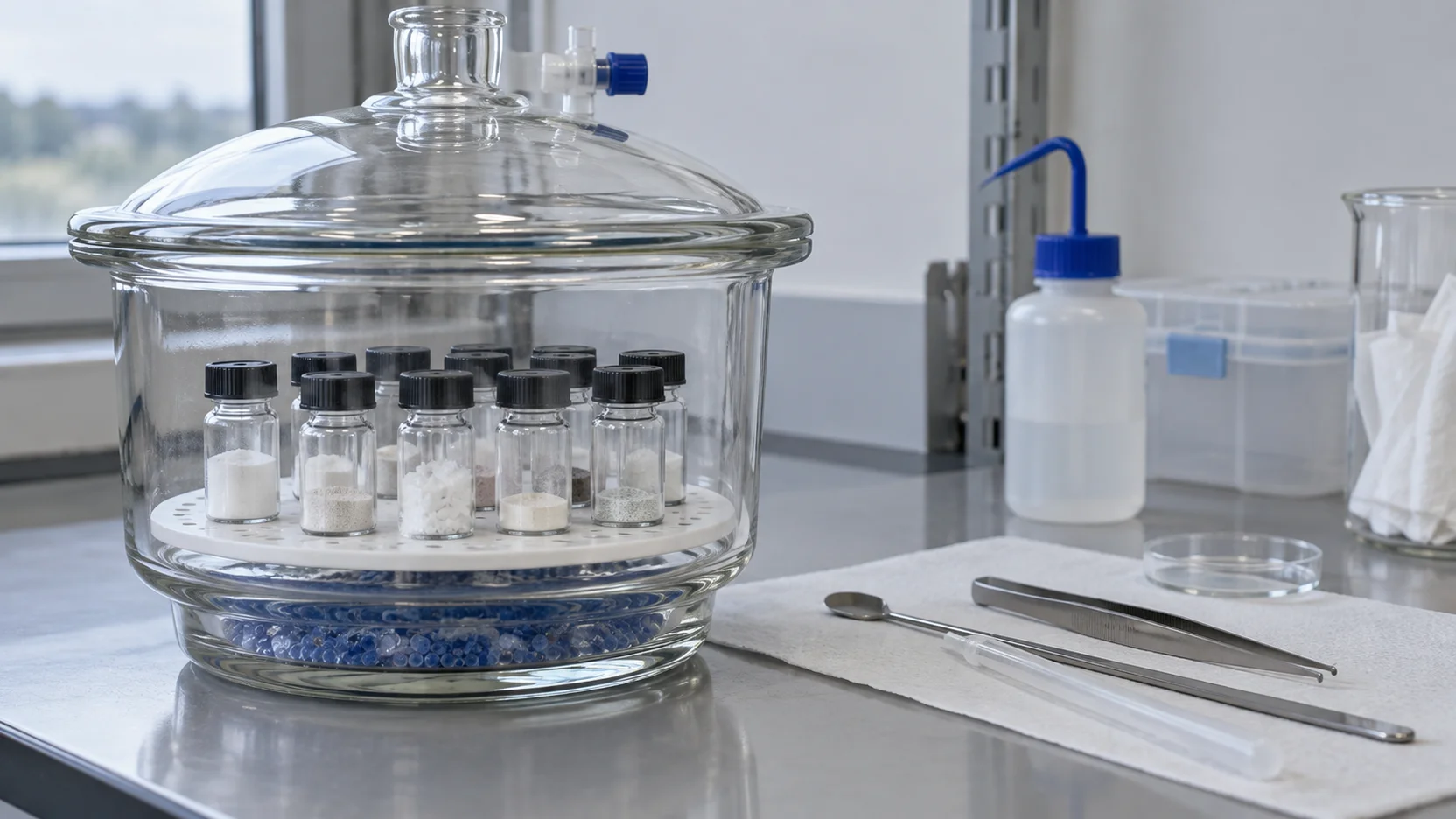
Sample containers, connectors and transfer equipment should be suitable for the solvent and kept dry and clean. Minimize open exposure, use an appropriate closed-transfer method and seal samples promptly. Otherwise, the measured water may include water introduced during sampling.
Ethylene carbonate (EC) with nonuniform phase distribution also raises representative-sampling issues. If melting is needed, use a controlled method suited to the packaging and equipment, then sample according to procedure once the material is uniform. Heating does not replace moisture protection or automatically restore water-contaminated material to compliance.
For example, a newly washed sample bottle appears clean but is not fully dry. Adding solvent transfers residual water from the bottle walls into the sample. The elevated result does not directly establish moisture uptake by the entire original drum. Returning the remainder could then spread localized contamination to the bulk material. Distinguishing the sample bottle, transfer path and original package helps locate water entry and obtain a new representative sample under the established procedure.
Moisture control must not compromise safety
Dimethyl carbonate (DMC), diethyl carbonate (DEC) and ethyl methyl carbonate (EMC) require attention to flammability. Control ignition sources, maintain appropriate ventilation and apply grounding, bonding and other antistatic measures as required by the equipment and material. Slower evaporation of EC or propylene carbonate (PC) does not permit ignoring SDS protective requirements.
Nitrogen blanketing can reduce humid-air entry, but nitrogen leaks create oxygen-deficiency and asphyxiation risks. It must not be vented indiscriminately into inadequately ventilated spaces. Containers and equipment must be suitable for the actual pressure. Ordinary non-pressure-rated drums or intermediate bulk containers (IBCs) must not be pressurized with nitrogen for discharge without authorization.
Closing a system against moisture does not mean blocking vents, pressure relief or other safety devices. Dryness, ventilation, fire protection and pressure protection must all be maintained.
Distinguish the sample from the bulk material when water changes
For an abnormal result, first retain sample and batch information and check the sample bottle, exposure history, packaging seal and shared-equipment residues. Sample contamination and moisture uptake by an entire batch are different problems. One reading cannot establish every cause.
If a change in material condition is confirmed, stop using the affected material, segregate and identify it, and assess it under the applicable procedure. Normal appearance or clarity after reheating cannot replace assessment of water and relevant quality parameters.
References
Metrohm: water determination and analytical methods for battery materials
HSE: safe use and handling of flammable liquids (general risk guidance)