
Moving from one sample bottle to bulk supply changes more than quantity. Specification consistency, packaging protection of low-water material, receiving capabilities and the costs included in a quotation all affect practical use. Understanding these conditions lets technical assessments and purchasing arrangements work from the same facts.
Specifications: turn a grade name into comparable parameters
Purchasing specifications need to translate ‘battery grade’ into main-component content, water, acidity and application-relevant impurity parameters, with test methods clearly defined. Results from different methods or measurement bases should be used for assessment only after confirming comparability.
Specification limits define agreed quality requirements, typical values describe common product characteristics, and measured batch values relate to specific samples. Quotations should be compared using the same specifications and measurement basis.
Samples and batches: how far does a small-sample result extend?
Small samples support an initial assessment of suitability for the target application. Independent production batches help reveal consistency. Trials with larger packages bring transfer, sealing and actual consumption patterns into the assessment. Stable supply then depends on maintaining these conditions over time. Several sample bottles filled from one batch still represent only one production batch.
The scope and number of validation rounds can be defined by application risk. The aim is to extend sample results progressively to actual conditions of use, rather than apply the same test list to every project.
Raw material conformity and cell performance meeting the objective are related but different assessments. Keeping sample batch numbers, test conditions and results linked helps distinguish raw material changes from changes in formulation or operating conditions when differences arise.

Packaging and delivery: match quantities to receiving conditions
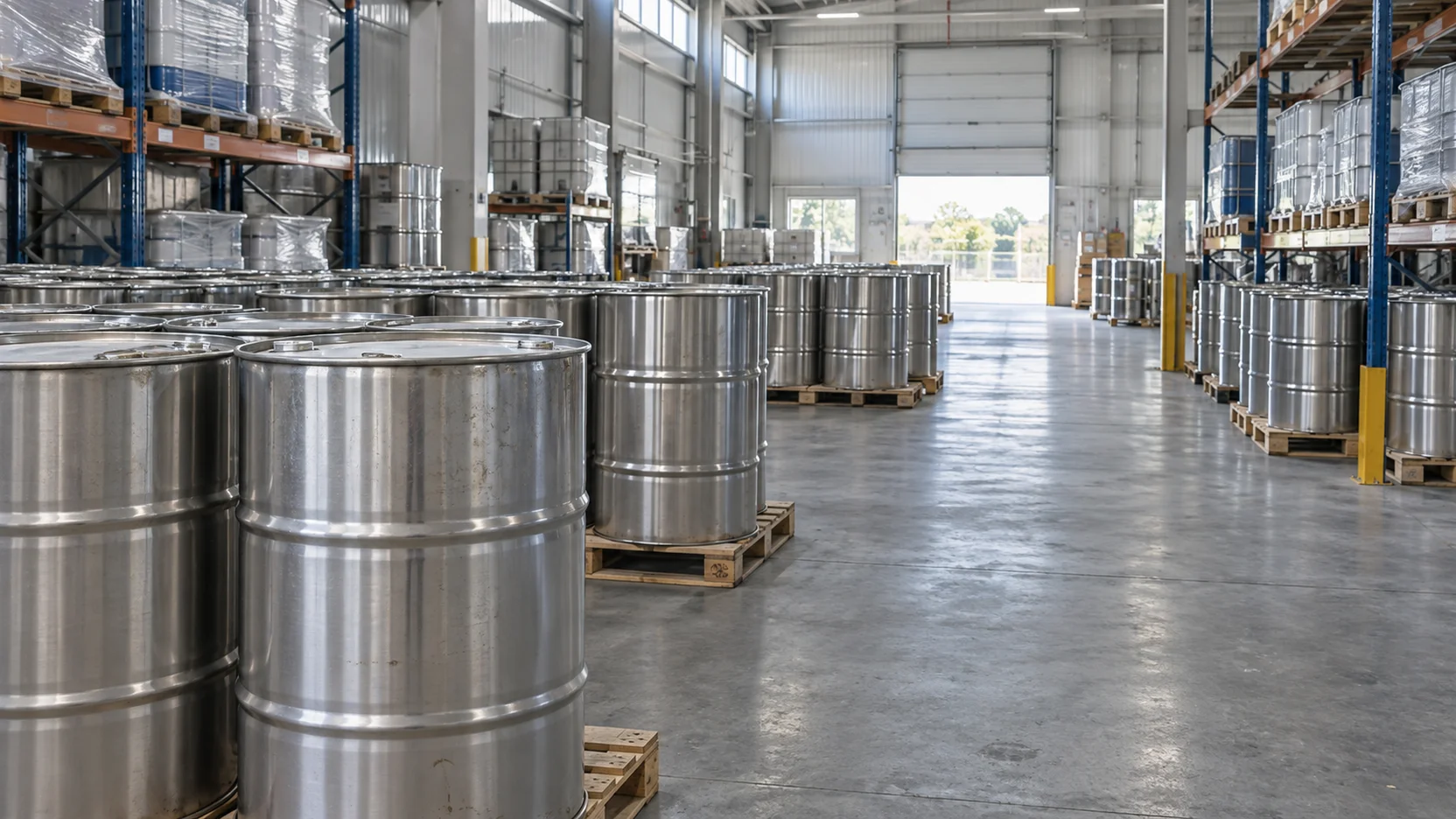
Small packages support limited trials. Drums, intermediate bulk containers (IBCs) and tank containers built to international standards (ISO tanks) involve different transfer equipment, storage space and cleaning arrangements. Packaging needs to match consumption and receiving conditions; repeatedly opening large packages for small withdrawals may increase moisture exposure. Containers must also meet material-compatibility and applicable transport requirements. Confirm available packaging options with the supplier.
Ethylene carbonate (EC) may arrive solid or partly crystallized. Sites using liquid transfer need appropriate controlled melting and temperature-maintenance arrangements. Dimethyl carbonate (DMC), diethyl carbonate (DEC) and ethyl methyl carbonate (EMC) involve flammable-liquid handling; ventilation, fire protection and antistatic measures during unloading must not be omitted. Ordinary non-pressure-rated packaging must not be pressurized for discharge without authorization.
Minimum order quantity (MOQ) is the smallest order a supplier accepts and may depend on packaging, batches and transport arrangements. Individual purchase quantities should also reflect consumption rate, inventory space and quality retention after opening. Lead times need clear stock-preparation, transport and receiving arrangements.
Documentation: different files answer different questions
A certificate of analysis (COA) connects batch numbers with test results. A technical data sheet (TDS) describes product characteristics. A safety data sheet (SDS) explains hazards, handling and transport information. Together they help characterize the goods, but they cannot replace one another.
Cross-border delivery also involves destination import and chemical-management requirements. REACH is the chemicals regulation for the European Union and European Economic Area. Transport classifications and customs commodity codes each have their own purposes. Documentation should match the actual product, supply relationship and applicable jurisdiction.
Understand the differences between COA, SDS, TDS and REACH
Understand UN numbers, dangerous goods classifications and HS codes
From quotation to actual material-use cost
Beyond the price per tonne, packaging, freight, applicable dangerous goods transport charges, insurance, taxes, retesting, inventory and handling losses affect total cost. EC melting and temperature maintenance, return of reusable packaging or tank-container occupancy may also incur costs.
Trade terms such as Ex Works (EXW), Free On Board (FOB) and Cost, Insurance and Freight (CIF) define different delivery arrangements and allocations of costs and risks. Compare quotations for the same product specification, quantity, destination and delivery conditions, and clarify the stage through which each cost is included.
For example, two offers cover the same specification and quantity. A includes material and single-use packaging, with transport to the factory charged separately. B includes packaging and freight to a named location but requires a separate deposit for a reusable container and responsibility for return transport. Add A’s freight on a comparable basis and clarify B’s return costs and deposit-refund conditions. A refundable deposit ties up funds and should not simply be counted as a final consumed cost. Taxes, unloading and other unspecified items still require separate clarification.
You do not need every answer before starting a discussion
With a defined specification, discussion can focus directly on samples, packaging and bulk delivery. At the research stage, known applications and existing parameters are also useful. Progressively clarifying open conditions is more effective than imposing an apparently complete checklist unsuited to the actual use.
To discuss Lixing supplies of DMC, DEC, EMC, EC or propylene carbonate (PC), start with the product name, application and expected quantity, then discuss specifications, samples and delivery arrangements as the work progresses.