
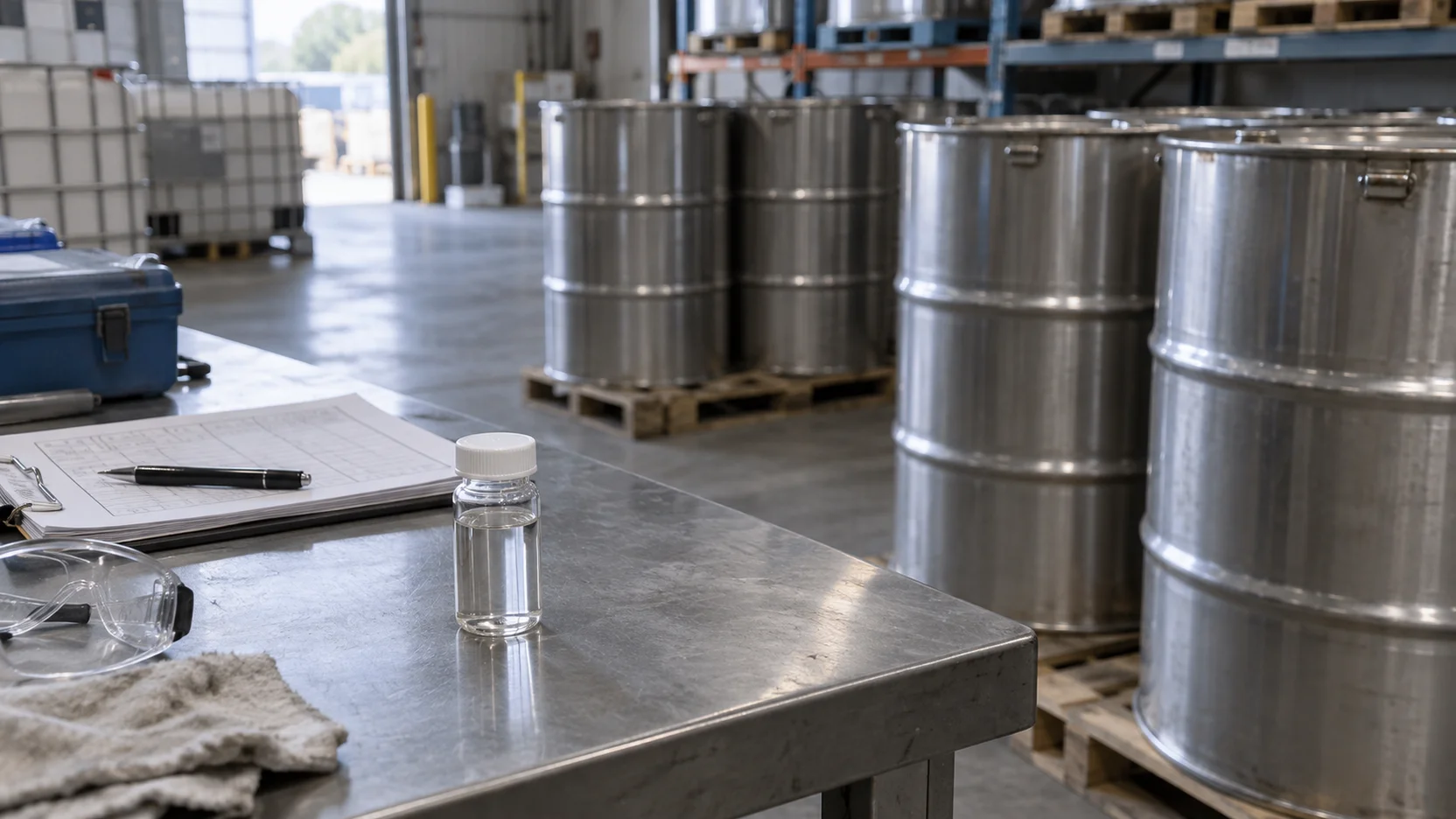
Battery-grade and industrial-grade products of the same carbonate share the same principal compound. Their differences lie mainly in intended use, the quality parameters controlled, and packaging and handling conditions that preserve quality before use. Industrial grades also have process-specific quality requirements, so grade selection should be based on the actual application.
Grade names describe intended use; specifications define requirements
Products both called dimethyl carbonate (DMC) may have the same main molecule but different controls on water, residual alcohols and other impurities. Battery grade and industrial grade help identify intended applications, but the names cannot replace full specifications. Grade definitions in different product documents may also differ.
Comparing grades therefore requires both main-component content and specific controlled parameters and test methods. One percentage cannot capture every difference. Conversely, a tighter limit for one parameter does not mean greater value in every industrial process.
Compare applicable product standards, specific specifications and test methods to establish the controlled parameters and limits associated with a grade name.
Why different uses prioritize different parameters
| Application | Common priorities | Reason |
|---|---|---|
| Battery electrolytes | Water, acidity and system-relevant trace impurities | May affect electrode interfaces and side reactions |
| Coatings and cleaning | Solvency, evaporation, color, residue and compatibility | Relate to film formation, surface quality and drying |
| Chemical synthesis | Reactive impurities, water content and composition | May affect reaction selectivity, catalysts and separation |
Electrolytes remain in contact with active electrodes over long periods. Trace water and reactive impurities may affect interfaces and side reactions, so water, acidity, specific organic impurities and metals are often considered. The particular scope changes with the lithium salt, materials and intended use.
Coatings may place greater emphasis on resin dissolution, evaporation rate, color and film formation. Cleaning processes may focus on contaminant dissolution, substrate compatibility and residue. Chemical synthesis may be sensitive to particular impurities affecting the reaction or catalyst. These are substantive quality requirements too; an industrial-use classification does not make them unimportant.
DMC, for example, can be used as a coating solvent. In electrolytes, the focus is on interactions of impurities with lithium salts and electrode interfaces. In coatings, its ability to dissolve the selected resin and its effect on the coating film after evaporation also matter. DMC samples with the same main-component content may differ in suitability because their impurity compositions differ.
Why packaging is part of grade differences
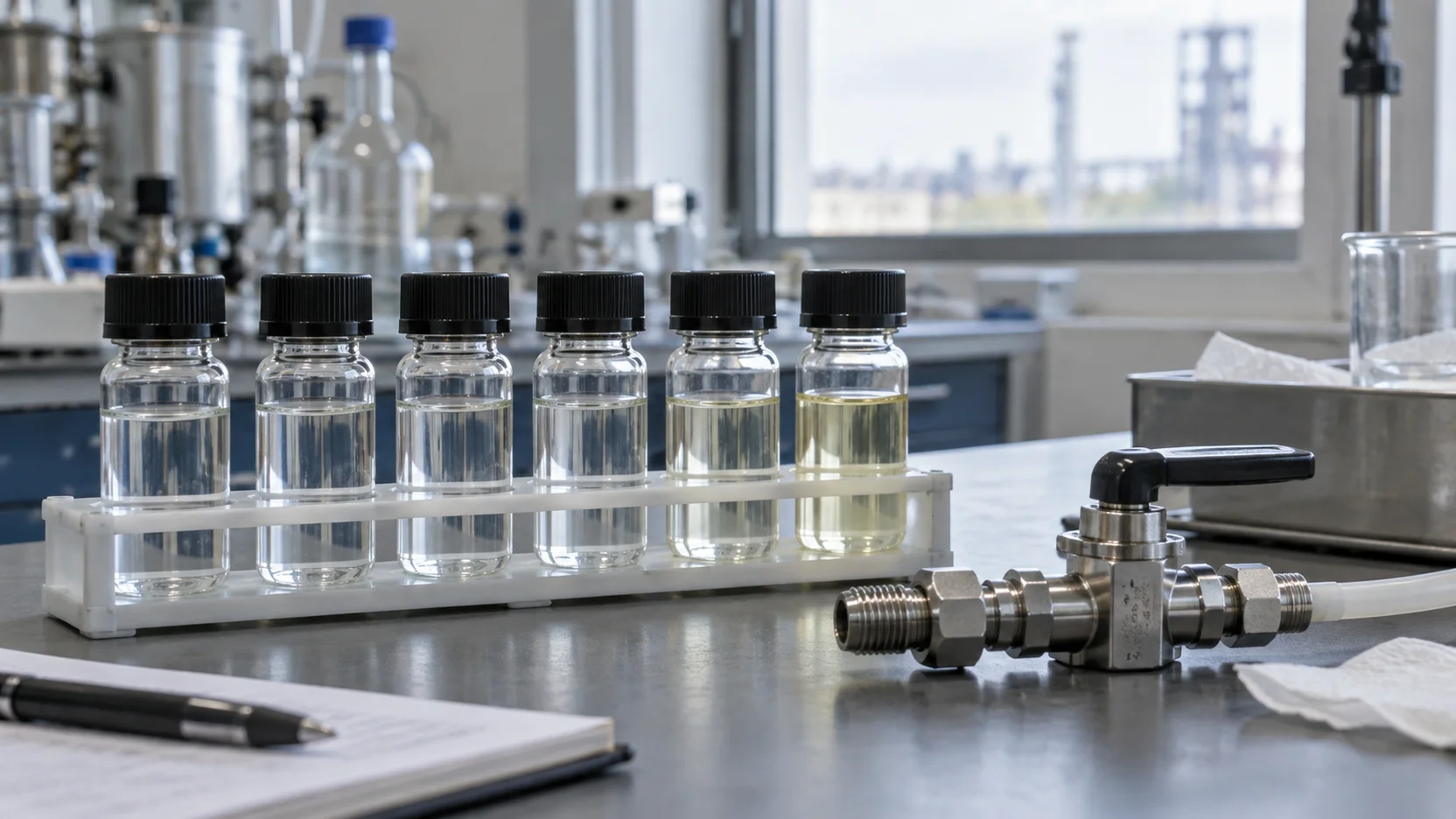
For materials with strict water or particle requirements, suitable packaging, sealing and transfer must preserve the refined state. Damp containers, residues in shared lines or repeated opening may change a previously tested material.
For example, the same low-water material may reach different states after transfer into dry, sealed packaging versus a container with water on its internal walls. Packaging material, sealing and transfer conditions jointly determine whether the original quality is maintained. Factory-release values must be considered together with the condition at use.
Can products with the same name be substituted directly?
Whether an industrial-grade product suits a particular battery system depends on actual parameters, impurity composition and application results. The name alone can neither establish nor rule out suitability. Simple on-site drying does not turn industrial grade into battery grade: it may not remove other impurities and may introduce new contamination.
Using a battery-grade product in an industrial process may not add value. If tighter impurity requirements have no effect on the process, material or control costs may rise without changing the outcome; actual costs still need comparison. Moreover, a higher grade does not automatically provide the solvency or evaporation rate required by the application.
Compare specific specifications for the intended use
When comparing products, first confirm that they are the same carbonate, then examine specifications, analytical bases and results in use for the intended application. Give priority to parameters that affect the process, rather than comparing grade names alone.